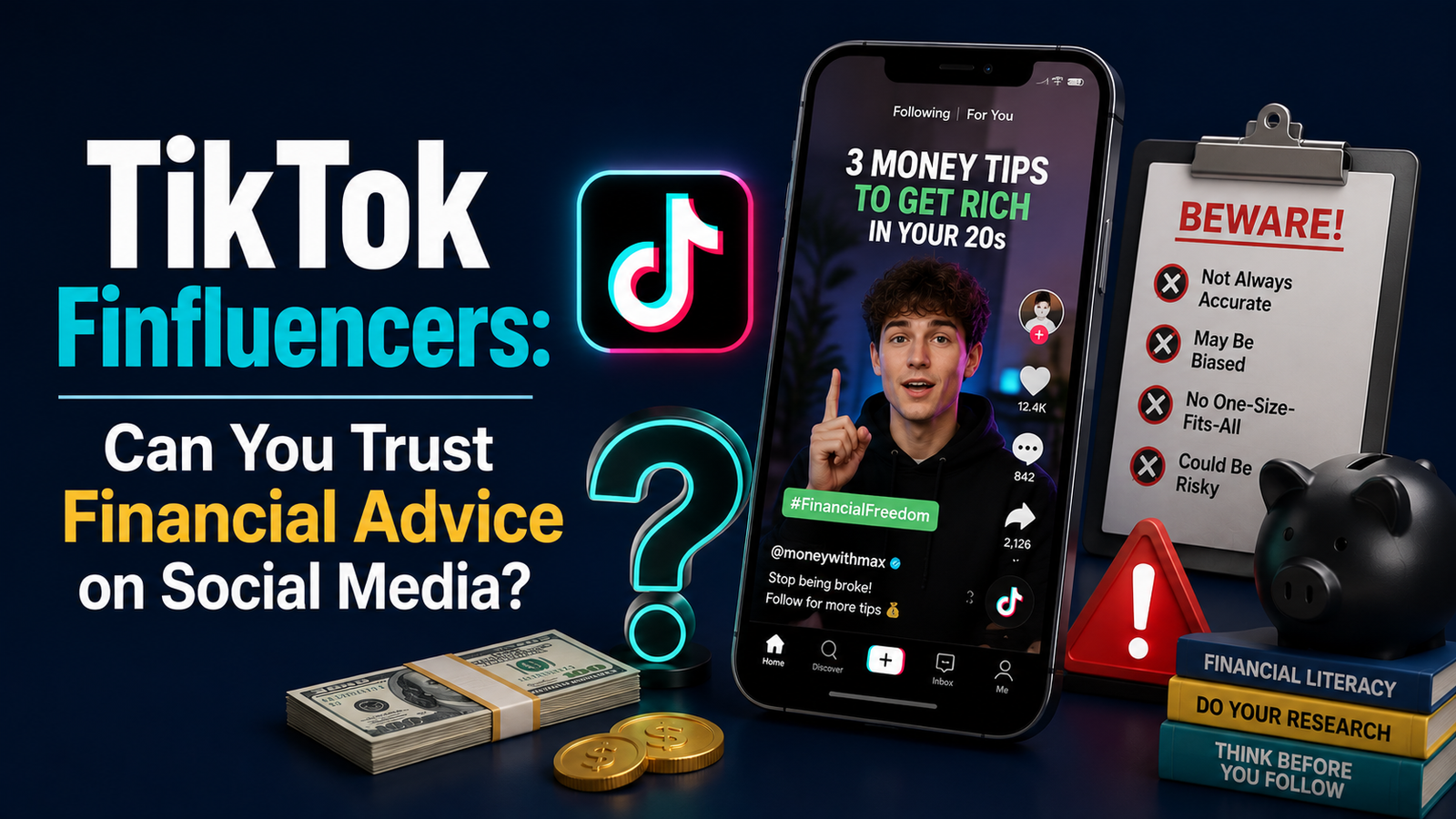
Open TikTok, Instagram, or YouTube Shorts on any given day, and it won’t take long to find someone explaining how to get out of debt, pick stocks, or “retire by 35.” These creators — commonly known as finfluencers, short for financial influencers — have become one of the most powerful and controversial forces shaping how Americans, especially younger ones, think about money.
Millions of people now turn to social media before they turn to a bank, a financial advisor, or even a textbook. That shift has real upsides: financial topics that once felt intimidating or inaccessible are now being discussed in plain, relatable language to massive audiences. But it also comes with a serious downside — most of this content isn’t reviewed by regulators, isn’t required to disclose important context, and, according to recent research, is getting less accurate over time, not more.
This article breaks down who finfluencers actually are, how much Americans trust them, what the data says about the quality of their advice, and how to separate genuinely useful financial content from content that could cost you real money.
Just How Big Is #FinTok?
Financial content on social media isn’t a niche corner of the internet anymore — it’s a dominant source of financial information for a huge share of Americans, particularly younger generations.
According to industry surveys, roughly three-quarters of social media users say they trust the financial advice shared on TikTok specifically, and that trust isn’t limited to younger users — 61% of baby boomers surveyed said the same. Among Gen Z specifically, nearly half say they prefer TikTok over every other platform when seeking financial advice online.
Usage spans a wide range of financial topics. One widely cited industry report found Americans turning to TikTok for advice on credit cards and credit scores (cited by a third of users), budgeting (a quarter of users), and investing (roughly a quarter of users). In that same survey, a majority of respondents said they felt more financially secure since engaging with financial content on TikTok, and a similar share said the platform’s finance community had improved their household’s financial situation.
Why Gen Z Turns to Social Media First
Research from the CFA Institute has found that Gen Z is significantly more likely than older generations to engage with finfluencer content across TikTok, YouTube, and Instagram. Part of this comes down to access — many young Americans simply don’t have the same access to professional financial advisors that older, wealthier generations do, whether due to cost, account minimums, or simply not knowing where to start. Social media fills that gap by offering free, immediately accessible content that doesn’t require an appointment, a minimum account balance, or admitting financial confusion to another person face-to-face.
The Trust Paradox: Popular, But Not Fully Trusted
Here’s where the picture gets more complicated. Despite how widely Americans consume financial content on social media, trust in that content is far from universal — and TikTok, specifically, has an unusual reputation problem.
A 2025 survey found that TikTok was, by a wide margin, the least trusted social media platform for financial advice among Americans overall, with 44% naming it the least trustworthy source, ahead of Instagram, Facebook, and X. Strikingly, this skepticism was even more pronounced among Gen Z themselves — 53% of Gen Z respondents named TikTok as the least trustworthy platform for financial advice, despite being the demographic most likely to actually consume financial content there.
This paradox — heavy usage paired with low stated trust — suggests that many people are engaging with finfluencer content more for entertainment, general awareness, or a starting point for further research, rather than as a fully trusted source they’d act on without question. It also reflects growing public awareness that follower count and confidence on camera don’t necessarily equal financial expertise.
Notably, most Americans say a large social media following doesn’t make someone more trustworthy — about three-quarters hold this view. Gen Z, interestingly, is the demographic most likely to believe a large following is a signal of trustworthiness, even though they’re also the most likely to distrust TikTok specifically as a platform.
What the Data Actually Says About Content Quality
Trust perceptions are one thing. Actual content accuracy is another — and recent independent research paints a concerning picture.
A detailed 2026 analysis that graded viral finance TikToks on accuracy, risk disclosure, oversimplification, and educational value found that content quality has been getting worse, not better. In September 2025, 70% of the finance TikToks reviewed received an overall grade of C or below. By April 2026, that number had climbed to 80%. Missing risk disclosures were an even bigger problem: the share of videos receiving a failing grade for risk disclosure jumped from 30% to 60% over that same period.
Oversimplification was similarly widespread. In the 2026 analysis, 70% of videos scored poorly for oversimplifying complex financial concepts, up from 60% the year before. Perhaps most tellingly, truly high-quality educational content remained rare throughout — only about 20% of videos earned strong marks for educational value, and none received a top grade for accuracy in the most recent analysis.
Separate research from the CFA Institute reinforced this transparency problem, finding that only about 20% of finfluencer content that included specific recommendations came with any form of disclosure — meaning the vast majority of creators making investment or financial suggestions weren’t disclosing potential conflicts of interest, sponsorships, or their own lack of professional credentials.
Why This Matters: Regulators Are Paying Attention
The finfluencer boom hasn’t gone unnoticed by U.S. regulators. Both the Securities and Exchange Commission (SEC) and the Financial Industry Regulatory Authority (FINRA) have issued warnings about unqualified individuals making financial claims without proper disclosures or oversight.
This isn’t just a theoretical concern. FINRA has already brought enforcement actions tied to finfluencer partnerships — in one notable 2024 case, a fintech firm was fined $850,000 for failing to review, approve, or retain influencer content promoting its products, a clear signal that regulators view finfluencer marketing as falling under the same compliance rules that govern traditional financial advertising.
FINRA Rule 2210, which governs public communications from broker-dealers, and the SEC’s Marketing Rule, which regulates how investment advisers can use testimonials and influencer endorsements, both apply to this space — even though enforcement often lags behind the speed at which viral content spreads.
Not All Finfluencer Content Is Bad
It’s important not to paint the entire category with the same brush. Some of the most-followed finance creators genuinely do offer sound, accessible guidance that aligns with mainstream financial best practices — encouraging behaviors like building an emergency fund, starting to invest early, or avoiding high-interest debt.
The CFA Institute’s research specifically noted that many popular finfluencers are skilled at translating complex financial concepts, like compound interest or diversification, into plain, relatable language that resonates with audiences who might otherwise tune out a traditional financial lecture. Trends like “loud budgeting” — publicly and unapologetically prioritizing financial goals over social spending pressure — have emerged from this space and reflect genuinely constructive shifts in how younger Americans talk about money.
The core issue isn’t that all finfluencer content is bad. It’s that there’s no consistent way for the average viewer to distinguish reliable, well-informed creators from those offering confident-sounding but inaccurate or dangerously oversimplified advice — especially since, according to the data, poor-quality content significantly outnumbers high-quality content on the platform.
How to Vet Financial Advice on Social Media
Given how much financial content now flows through social platforms, learning to evaluate it critically has become a genuinely useful financial literacy skill in its own right. A few practical checks can help.
Look for disclosures, not just confidence. Legitimate financial professionals and responsible creators typically disclose relevant credentials, sponsorships, or personal relationships with brands they mention. The near-total absence of disclosure found in most finfluencer content is itself a red flag worth taking seriously.
Be skeptical of guarantees and urgency. Genuine financial advice rarely promises guaranteed returns, “get rich” timelines, or urgent, limited-time opportunities. These are common hallmarks of content designed to drive engagement or sales rather than provide sound guidance.
Check whether risk is mentioned at all. Given that a majority of viral finance content in 2026 failed to adequately disclose risk, actively look for creators who discuss downsides, uncertainty, or “it depends on your situation” nuance — that’s often a sign of more responsible content.
Treat social media as a starting point, not a final answer. Using finfluencer content to become aware of a concept — a Roth IRA, the debt snowball method, index fund investing — is very different from acting on specific, individualized recommendations without independent verification.
Cross-reference with established, regulated sources. Government resources like the Consumer Financial Protection Bureau, nonprofit financial education organizations, and licensed financial professionals remain the more reliable check against social media claims, particularly for anything involving specific investment or debt decisions.
Consider the creator’s actual track record and credentials, not just their apparent success. Research has found that audiences who trust finfluencers often weight the “apparent wealth” or online popularity of a creator heavily, even though those signals say little about actual financial expertise or the accuracy of the advice being given.
The Bigger Picture: A Financial Education Gap Filled Imperfectly
The rise of finfluencers reflects something real: a significant portion of Americans, especially younger adults, aren’t getting adequate financial education through traditional channels like schools or professional advisors, and social media has stepped in to fill that gap. Federal Reserve research has acknowledged that social media can genuinely help democratize access to financial education, exposing people to concepts and conversations they might not otherwise encounter.
But the same research also warns that this democratization comes with real exposure to misinformation, low-quality advice, and in the worst cases, outright financial fraud. The data increasingly suggests the risks are growing rather than shrinking as the volume of financial content on these platforms continues to expand faster than any meaningful content moderation or regulatory oversight can keep pace with.
The Bottom Line
Financial content on social media isn’t going away, and for many Americans, it has become a genuinely valuable entry point into topics they might never have engaged with otherwise. But the data is increasingly clear: the quality of that content, on average, is inconsistent at best and declining at worst, with risk disclosures and factual accuracy both trending in the wrong direction even as engagement continues to climb.
The healthiest approach isn’t to reject financial content on TikTok or Instagram outright, nor to accept it uncritically just because a creator seems confident, relatable, or successful. It’s to treat social media the way you’d treat advice from a knowledgeable friend — a useful starting point for ideas and awareness, but never a substitute for verifying important financial decisions against credible, accountable sources before you act.