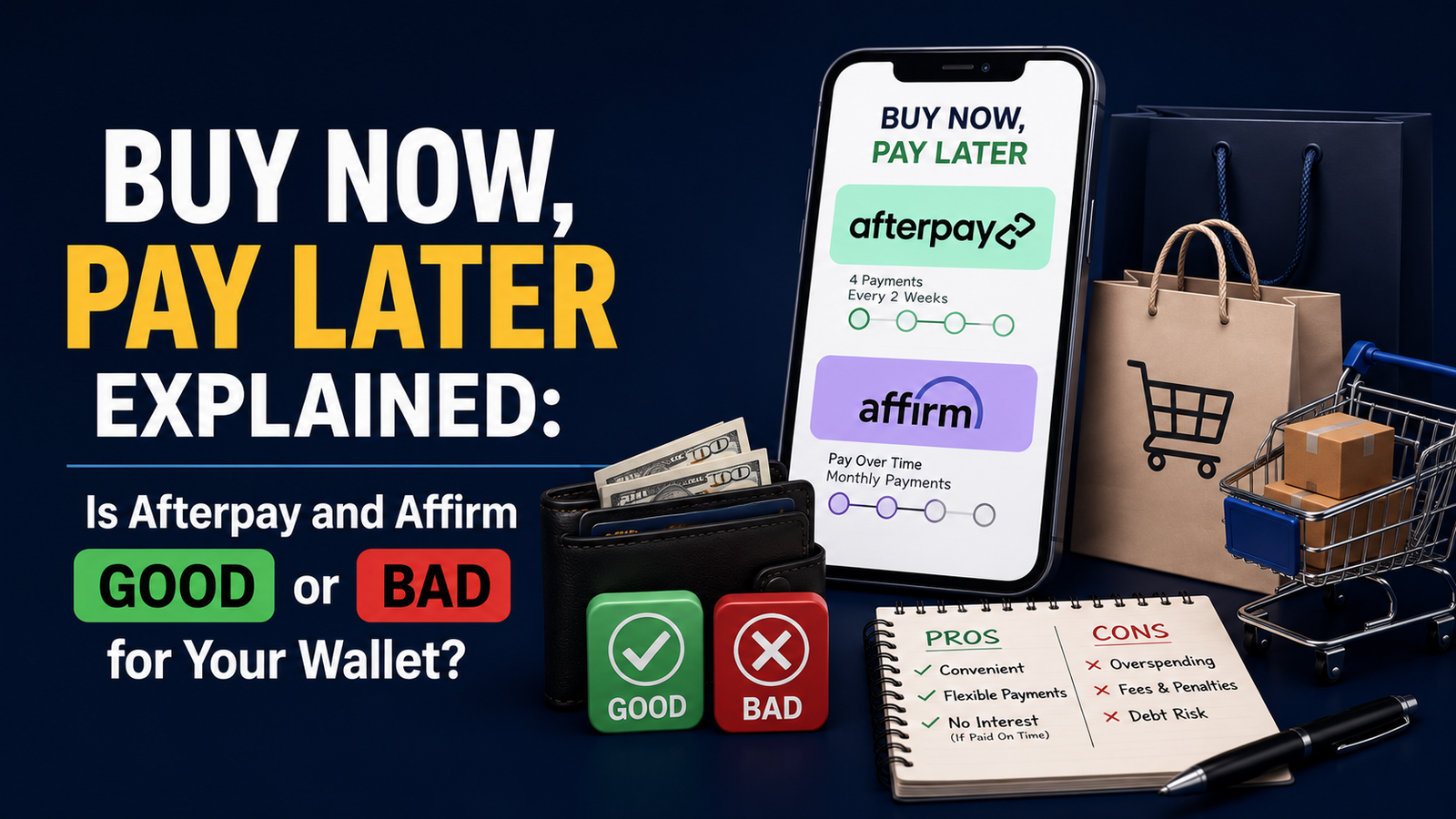
Walk through checkout on almost any major American retail website today, and you’ll see it: a small button offering to split your purchase into four easy payments, no interest, no hassle. Buy Now, Pay Later — commonly known as BNPL — has moved from a niche checkout option to one of the most widely used forms of consumer credit in the United States, with providers like Affirm, Afterpay, Klarna, PayPal, and Sezzle now embedded across nearly every corner of online and in-store shopping.
For millions of Americans, BNPL has become a genuinely useful budgeting tool. For others, it’s quietly becoming a source of financial strain that doesn’t show up the way traditional debt does — at least, not yet. Understanding how these services actually work, who’s using them, and where the real risks lie has never been more important.
What Buy Now, Pay Later Actually Is
At its core, BNPL is a short-term installment loan offered at the point of sale. Instead of paying the full price of an item upfront, a shopper splits the cost into a series of smaller payments — most commonly four equal installments spread over six weeks, though longer-term BNPL plans of several months or more are increasingly common for bigger purchases.
The most popular version, often called “Pay in 4,” typically works like this: the shopper pays 25% of the purchase price at checkout, then the remaining three installments are automatically charged to a linked debit or credit card every two weeks until the balance is paid off. If payments are made on time, many BNPL plans charge no interest at all, which is a major part of their appeal compared to a traditional credit card.
Longer-term BNPL loans, often used for bigger-ticket purchases like electronics or furniture, function more like traditional installment loans, spreading payments out over several months and sometimes charging interest depending on the provider, the retailer, and the shopper’s creditworthiness.
How Big Has BNPL Become in the US?
The scale of BNPL adoption in America is hard to overstate. According to a March 2026 survey from LendingTree, roughly 47% of Americans say they’ve used a BNPL service at least once, and about one in ten have used it six or more times. Usage is especially high among younger consumers, with 61% of Gen Z adults reporting they’ve used BNPL — but it’s not just a low-income or young-adult trend. Nearly 6 in 10 people earning $100,000 or more annually report having used BNPL as well, showing the appeal cuts across income brackets.
A separate J.D. Power study found that 37% of consumers made a BNPL purchase within the past 90 days, a five-percentage-point increase from the year before, rising to half of all consumers under 40. Spending volume tells a similar story: U.S. shoppers used BNPL for roughly $10.1 billion in spending between early November and Cyber Monday alone during the most recent holiday season, up about 9% year-over-year.
The overall U.S. BNPL market was valued at over $107 billion in 2025 and is projected to nearly grow to $258 billion by 2031, reflecting continued strong annual growth even as the market matures.
Who’s Actually Using It
Among BNPL users, PayPal leads as the most commonly used provider, followed closely by Affirm, Klarna, and Afterpay (now integrated with Cash App under parent company Block). Because many shoppers hold accounts with multiple providers simultaneously, usage figures across providers overlap significantly rather than adding up to a single market-share breakdown.
The Case for BNPL: Why It’s Genuinely Useful for Many Americans
BNPL’s popularity isn’t accidental. For many consumers, it solves real problems that traditional credit cards don’t address as well.
No interest, if used correctly. The classic “Pay in 4” structure, when payments are made on time, often carries zero interest — a meaningful advantage over the average credit card APR, which has climbed to roughly 21–22% in 2026.
Clear, predictable payment structure. Unlike a credit card, where minimum payments can create the illusion of affordability while interest quietly compounds in the background, BNPL plans come with a fixed number of payments and a fixed end date, which can make budgeting more straightforward for disciplined users.
Accessible to people with limited credit history. BNPL approval processes are often faster and less stringent than traditional credit applications, giving people with thin credit files — including many younger Americans — access to short-term financing they might not otherwise qualify for.
Useful for planned, one-time purchases. For a known, budgeted expense — a laptop for work, an appliance replacement, a planned larger purchase — spreading the cost over six weeks with no interest can be a genuinely smart way to manage cash flow without touching an emergency fund or high-interest credit.
The Case Against BNPL: Where the Risks Really Are
The same features that make BNPL appealing also create risks that aren’t always obvious at the moment of checkout.
It Encourages Loan Stacking
Because approval is fast and each individual plan feels manageable, many users end up juggling multiple BNPL loans across different providers and retailers at the same time — a pattern often called “loan stacking.” A single $300 purchase split into four payments might feel trivial, but four or five simultaneous BNPL plans across different apps can quietly add up to a meaningful recurring financial obligation that’s much harder to track than a single credit card statement.
Late Fees and Missed Payments Are Common
Recent data shows that roughly 41% of BNPL users have made a late payment at some point, according to 2026 industry data. Missing a payment can trigger late fees, and in some cases, the remaining balance may be accelerated or the account sent to collections, undermining the “no cost” appeal that draws many users in the first place.
BNPL Debt Is Now Affecting Credit Scores
For years, one of BNPL’s biggest selling points was that it typically didn’t appear on traditional credit reports, meaning it didn’t directly affect a user’s credit score the way a credit card or personal loan would. That’s changing fast. Affirm began reporting BNPL loans to credit bureaus in 2025, and FICO has started incorporating BNPL data into its scoring models. That means the assumption that BNPL is “credit-lite” and consequence-free is no longer accurate — late or missed BNPL payments can now damage a credit score just like a missed credit card payment.
This shift matters because many consumers built their BNPL habits under the old assumption that these loans were essentially invisible to future lenders. The Federal Reserve Bank of Richmond has flagged this shift as a systemic risk worth monitoring, particularly because outstanding BNPL debt in the U.S. is now estimated in the billions of dollars at any given time, much of which was previously untracked by traditional credit reporting.
It’s Expanding Into Everyday Essentials
BNPL was originally associated with discretionary purchases — clothing, electronics, travel. That’s changed. The service is increasingly being used for groceries, healthcare expenses, and other essential, recurring costs. Financing everyday necessities through short-term installment debt is a meaningfully different — and riskier — use case than financing a one-time discretionary purchase, since it can signal that a household’s regular income isn’t covering basic living costs without borrowing.
Lower-Income Households Face Greater Risk
Multiple industry surveys have found that lower-income households show higher rates of missed BNPL payments compared to higher earners. Combined with BNPL’s expansion into essential spending categories, this suggests the households that can least afford payment disruptions are also the ones most exposed to the consequences of a missed payment.
How to Use BNPL Without Hurting Your Finances
For consumers who choose to use BNPL — and given how widespread it’s become, many will — a few practical guardrails can make a significant difference.
Treat every BNPL plan like a real bill, not free money. Before agreeing to a plan at checkout, ask whether the purchase would make sense at full price today. If the honest answer is no, splitting the payment doesn’t change the underlying affordability problem — it just delays it.
Avoid stacking multiple simultaneous plans. Keeping track of one or two BNPL obligations is manageable. Juggling five or six across different apps significantly raises the risk of a missed payment simply due to the difficulty of tracking multiple due dates across different platforms.
Link payments to a debit card or bank account you actively monitor, not a credit card. Paying a BNPL installment with a credit card can create a dangerous scenario: interest accruing on top of interest if the credit card balance isn’t paid off, effectively turning an interest-free BNPL loan into a much more expensive debt.
Understand that BNPL can now affect your credit score. With reporting practices shifting industry-wide, it’s worth checking the specific terms of each provider you use and treating on-time BNPL payments with the same seriousness as any other credit obligation.
Reserve BNPL for planned, budgeted purchases — not everyday essentials. Using BNPL occasionally for a specific, planned purchase is very different from routinely relying on it to cover groceries or other recurring necessities. The latter is often a sign that a broader budgeting issue needs attention.
Where BNPL Regulation Is Headed
Regulators have taken increasing notice of BNPL’s rapid growth and its blurred lines with traditional consumer credit. The Consumer Financial Protection Bureau has scrutinized BNPL disclosure practices, and industry watchers expect continued regulatory attention as BNPL debt volumes grow and credit bureau reporting becomes standard across more providers. For consumers, this generally means BNPL is likely to look and feel more like traditional credit over time — with the consumer protections that come with that, but also the credit-score consequences.
The Bottom Line
Buy Now, Pay Later isn’t inherently good or bad — it’s a financial tool, and like any tool, the outcome depends heavily on how it’s used. For a disciplined shopper making a planned, budgeted purchase, an interest-free BNPL plan can genuinely be a smarter choice than a high-interest credit card. For someone juggling multiple simultaneous plans, using BNPL to cover essentials, or treating it as free money rather than real debt, it can quietly become one of the more dangerous forms of consumer credit in America today — especially now that missed payments carry the same credit score consequences as any other form of borrowing.
The safest approach is the simplest one: use BNPL sparingly, track every plan carefully, and always ask whether a purchase makes financial sense at its full price — because eventually, that’s exactly what it will cost.